Risk Stratification Is Foundational To Effective Population Health Management And Value-Based Care, But Many ACOs Struggle To Identify Emerging Patient Risk Early Enough To Intervene. Static Risk Scores, Fragmented Data, And Limited Visibility Make It Difficult To Prioritize Care Effectively.
Koan Health Helps ACOs Strengthen Risk Stratification Through Its Population Health Analytics—Giving ACOs A Unified View Of Patient Risk.
What Is Risk Stratification?
Risk stratification is the process of categorizing patients based on their likelihood of high-cost utilization or adverse health outcomes. By analyzing clinical, claims, and utilization data, ACOs can segment their population into risk tiers—enabling more targeted care management and resource allocation.
Effective risk stratification depends on bringing together fragmented data into a single, trusted source through healthcare data aggregation. With a complete view of patient risk, ACOs can make informed care management decisions and better support value-based care.
What Challenges Do ACOs Face with Risk Stratification?
Despite its importance, many ACOs struggle to operationalize risk stratification to take informed actions.
Limited Actionability
Risk scores and segmentation approaches can fail to prioritize the patients and actions that matter most.
Static Risk Scores
Static risk scores quickly become outdated, limiting timely intervention.
Limited Rising- Risk Visibility
Most tools focus on high-risk patients, making it challenging to identify rising-risk populations early.
Disconnected Data
Siloed clinical, claims, and utilization data limit a complete view of patient risk.
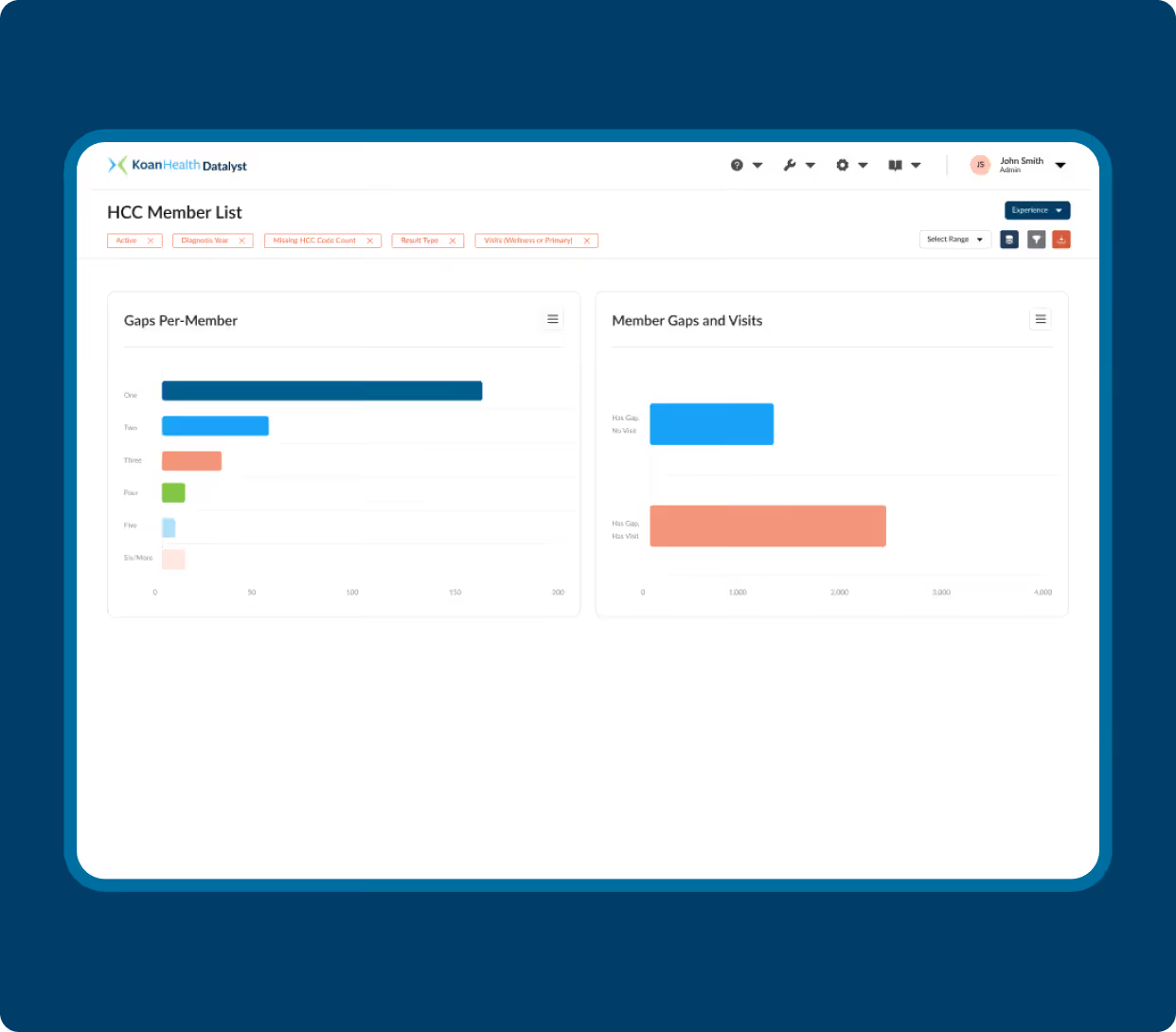
HCC Documentation Gaps
Missed HCC documentation can reduce RAF accuracy and reimbursement opportunities.
How Koan Health Improves Risk Stratification
Koan Health delivers a more advanced approach to risk stratification—combining integrated data, predictive analytics, and actionable workflows.
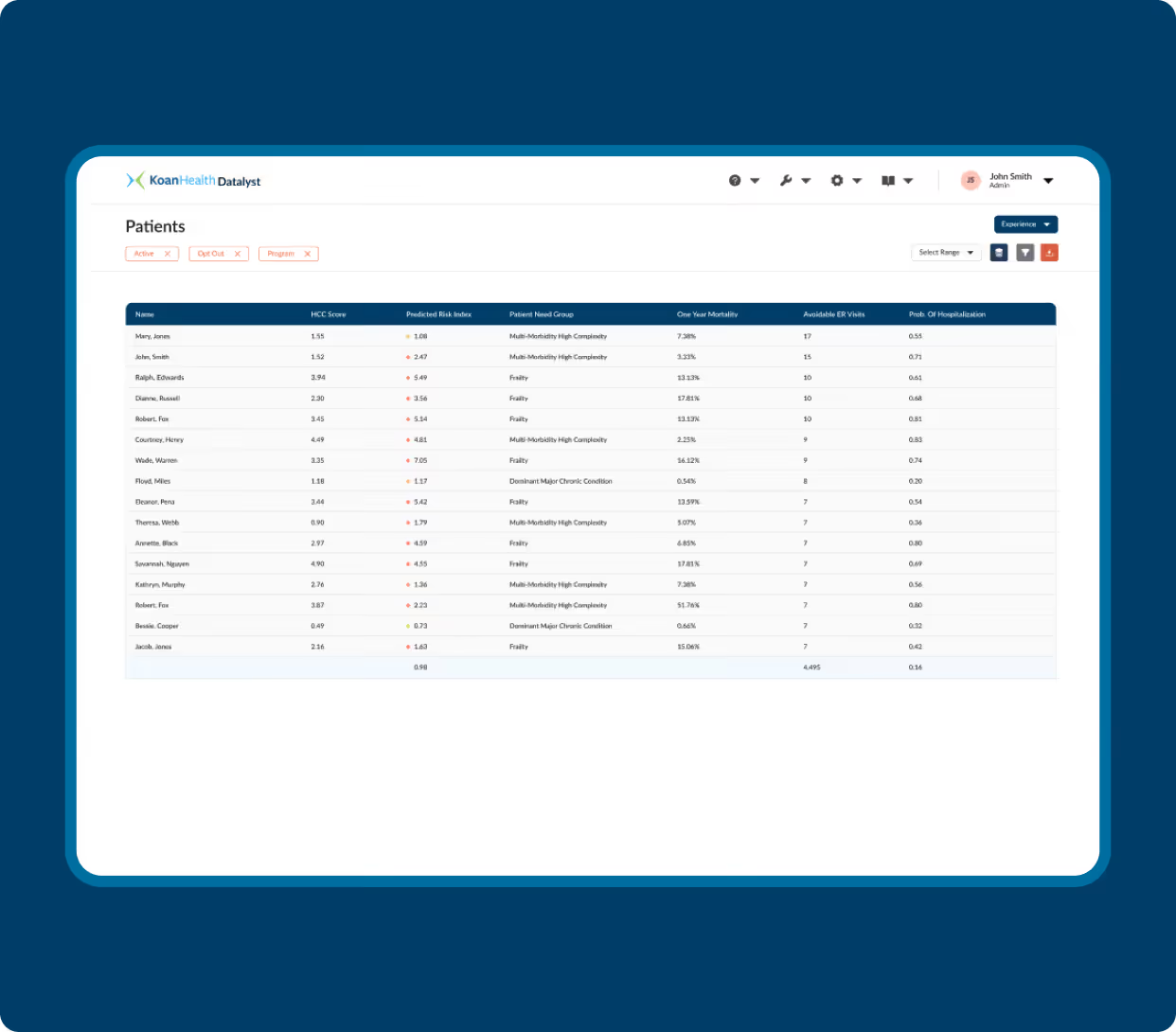
Identify High-Risk Patients with Precision
Stratify your population based on real clinical, claims, and utilization data—so care teams can focus on the patients who need attention most.
Most risk stratification tools generate scores. Koan Health helps you uncover what’s driving risk and where to intervene.
Natively Unified Data—Not Bolted Together
Koan Health integrates clinical, claims, and utilization data in a single platform, eliminating the need to reconcile fragmented sources.
Risk, Cost, and Utilization—Connected
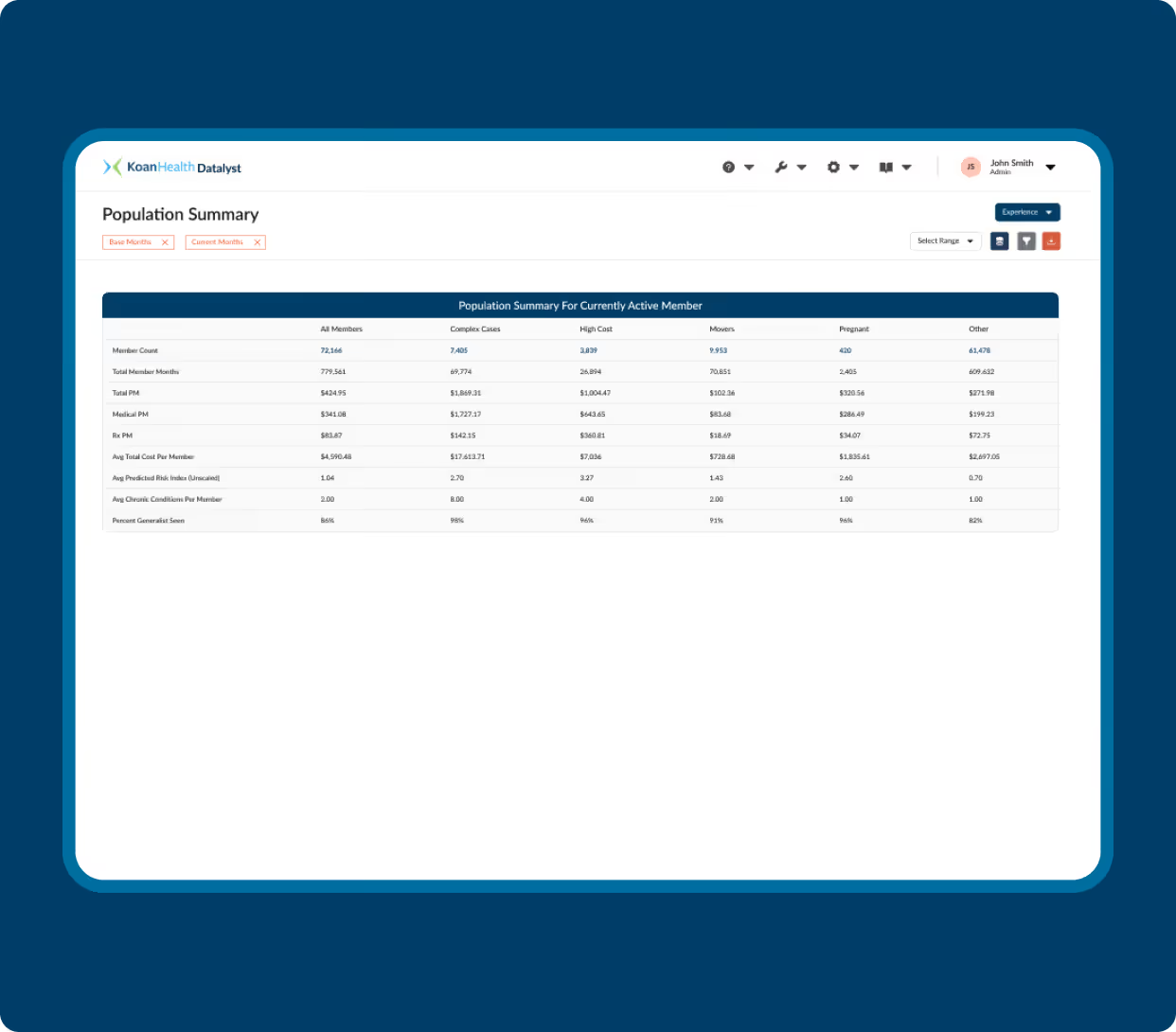
Connect patient risk to cost, utilization, and overall performance.
Cohort-Level Intelligence
Analyze trends across populations to identify patterns, anomalies, and emerging risk—not just individual patient scores.
Deep Drilldown Visibility
Move from population-level trends to service line and patient-level detail to understand what’s driving change.
Built for Action, Not Reporting
Prioritized patient views and workflow alignment ensure insights translate directly into care team actions.
Koan Health has shown itself to be a dedicated partner in our value-based care efforts. Their ability to provide precise and reliable data has been instrumental in advancing our clinical quality initiatives, enhancing our performance, and meeting payers' rapidly evolving data and reporting requirements.
Lee Handke, PharmD, MBA, Chief Executive OfficerNebraska Health Network
blog Post
ACO Population Health Analytics: Risk Stratification for Shared Savings Performance
Frequently Asked Questions For Risk Stratification
Risk stratification is the process of categorizing patients based on their likelihood of high utilization or adverse health outcomes. By analyzing clinical, claims, and utilization data, providers can segment populations into risk tiers and prioritize care management efforts more effectively.
Risk stratification helps ACOs prioritize patients based on risk, intervene earlier, and allocate care management resources more effectively. This supports better outcomes, stronger quality performance, and lower total cost of care.
Risk stratification combines clinical, claims, and utilization data to create a complete view of each patient’s risk profile. Patients are then segmented into risk tiers based on factors such as chronic conditions, utilization patterns, and predicted future cost.
High-risk patients already have complex conditions and high utilization, while rising-risk patients are those whose health status or utilization patterns indicate they are trending toward higher risk. Identifying rising-risk patients early creates an opportunity for proactive intervention before costs escalate.
ACOs should look for solutions that integrate clinical, claims, and utilization data, provide continuously updated risk insights, and connect those insights to actionable workflows. Platforms should help identify the drivers of patient risk, prioritize interventions, and inform care management decisions.
Turn Risk Stratification Into Action
See how Koan Health helps ACOs identify emerging patient risk, close HCC gaps, and prioritize proactive care.