

blog Post
Care Coordination
Care Coordination
For ACOs
Identify patients who need timely intervention, prioritize outreach, and coordinate care across providers to improve outcomes.



For Accountable CareOrganizations (ACOs), effective care coordination depends on timely information, clear priorities, and consistent follow-through across providers and care settings. Without connected data and workflows, needed interventions can be delayed or overlooked.
Koan Health helps care teams identify priorities, coordinate outreach, and monitor progress with greater visibility.
Koan Health helps care teams identify priorities, coordinate outreach, and monitor progress with greater visibility.
What Is Care Coordination?
Care coordination is the process of organizing patient care across providers, care settings, and transitions to help patients receive timely, appropriate, and effective care.
For ACOs and other value-based care organizations, effective care coordination helps reduce fragmentation by improving communication across providers while supporting continuity of care. This is especially important during hospital discharges, specialist referrals, and other transitions where timely follow-up can improve patient outcomes.
Why Care Coordination Breaks Down in Practice
Care coordination often breaks down at the point of execution. Care teams may know which patients need attention, but without shared visibility and clear workflows, outreach is delayed, follow-up is inconsistent, and tasks fall through the cracks. Disconnected systems and manual processes make it harder to coordinate across providers and act at scale.
Many organizations also lack visibility into whether interventions were completed or effective. That leaves care coordination incomplete and creates missed opportunities to improve outcomes and performance in value-based care.
What You Can Do with
Care Coordination
.svg)
Identify patients for intervention
Recognize which patients need attention based on care needs, risk, and utilization patterns.
.svg)
Prioritize outreach
Focus care teams on patients and care transitions requiring immediate follow-up.
.svg)
Coordinate care across providers
Improve communication and care continuity across providers and settings.
.svg)
Close Care Gaps
Identify and address care gaps to support quality improvement and better patient outcomes.
.svg)
Track care coordination performance
Monitor care coordination efforts and measure progress over time.
How Koan Health Enables Care Coordination
Koan Health provides the insights and workflow tools care teams need to coordinate patient care across providers, care settings, and transitions.
Patient Cohort
Identification
Segment patients using integrated clinical, claims, and risk data to prioritize patients needing intervention.
Workflow
Automation
Automate care coordination workflows to ensure consistent follow-up and reduce manual effort.
Real-Time
Patient Tracking
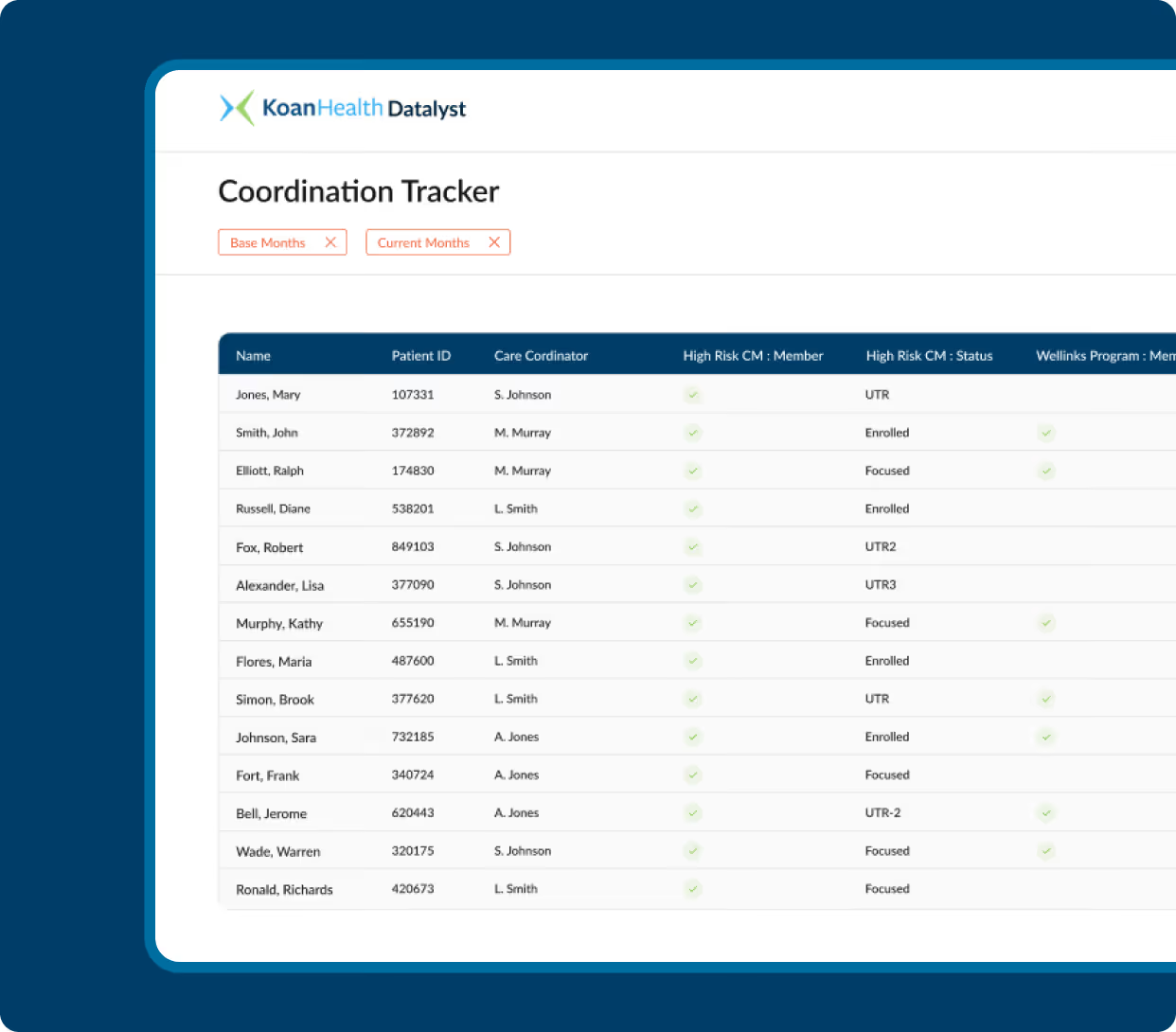
Track patient activity and care coordination efforts at the individual level with a shared view across providers.
Provider
Engagement
Deliver patient-level insights that help providers focus on patients, conditions, and care transitions needing the most attention.
Closed-Loop
Performance Tracking
Monitor care coordination activities from identification through intervention and outcome to support continuous improvement.
Why Choose Koan Health
Unified Population Health Platform
Bring care coordination together with risk stratification, quality reporting, financial, and population health analytics in one connected platform
Result: Faster action and more consistent gap closure.

Connected Data Foundation
Aggregate clinical, claims, and third-party data into a trusted foundation that supports coordinated decision-making across the organization.
Result: Improved alignment across care teams.

Designed for Care Team Workflows
Support care coordination processes with intuitive tools for prioritization, task management, and follow-up.
Result: Increased efficiency and reduced administrative burden.
.svg)
End-to-End Visibility
Track care coordination activities from patient identification through interventions and outcomes with visibility across the entire care journey.
Result: Continuous improvement and stronger value-based performance.
.svg)
Partnering with Koan Health transformed our care coordination processes. The integration and actionable data they provided have streamlined our workflows and empowered our providers to deliver more targeted patient care across our programs.Vice President, Clinical InformaticsRegional ACO

Frequently Asked Questions For Care Coordination
What is care coordination in healthcare?
Care coordination is the process of organizing patient care across providers, care settings, and transitions to help patients receive timely, appropriate, and effective care. It supports continuity of care by improving communication and reducing gaps in follow-up.
How does care coordination improve patient outcomes?
Care coordination improves patient outcomes by connecting care across providers, reducing gaps and delays, and supporting timely interventions. It also promotes better communication and more consistent follow-up throughout the patient journey.
How is care coordination used in value-based care programs?
In value-based care, care coordination helps ACOs identify patients needing intervention, improve quality performance, and reduce unnecessary utilization to support better patient outcomes.
What are the best practices for effective care coordination?
Effective care coordination includes identifying high-risk patients early, aligning care teams around shared workflows, ensuring timely communication across providers, and tracking interventions through completion. Regular monitoring helps improve performance over time.
What challenges do organizations face with care coordination?
Common challenges include fragmented data, disconnected workflows, and limited visibility into patient interventions. These issues can lead to missed care gaps, inconsistent follow-up, and reduced effectiveness of care coordination efforts.
What technology do ACOs use to support care coordination?
ACOs typically use platforms that integrate clinical, claims, and operational data into a unified view of patient activity. These tools help identify patients who need intervention, prioritize outreach, track efforts, and monitor outcomes over time.
.svg)
Turn Care Coordination Into Measurable Performance
Koan Health helps ACOs identify priority patients, coordinate care across providers, and measure progress with greater visibility and confidence.


