

blog Post
Data Aggregation
Healthcare Data
Aggregation for ACOs
Aggregate clinical, claims, and operational data into a unified, trusted source for accurate analytics, quality performance, and reporting.



Healthcare organizations generate vast amounts of clinical, claims, and operational data, but those sources are often fragmented across systems. Without a trusted data foundation, analytics and reporting become less reliable.
Koan Health brings your data together into a single, validated source that supports accurate analytics, quality reporting, and value-based performance.
What Is Healthcare
Data Aggregation?
Healthcare data aggregation is the process of combining data from multiple sources—such as EHRs, claims systems, and operational platforms—into a single, unified dataset.
For ACOs and value-based care organizations, healthcare data aggregation creates a comprehensive view of patient populations, supporting quality measures, care gap identification, and population health management.
What Challenges Do ACOs
Face with Data Aggregation?
Most ACOs don’t lack data; they lack a trusted data foundation. When data remains fragmented across multiple systems:
.svg)
Clinical and claims data don’t match
.svg)
Reports produce conflicting results
.svg)
Teams spend time reconciling instead of acting
.svg)
Insights are delayed or incomplete
.svg)
High-impact opportunities remain hidden
Unify, Classify, and Validate
Your Data
Koan Health transforms fragmented healthcare data through a three-step process that creates a trusted foundation for analytics, reporting, and performance.
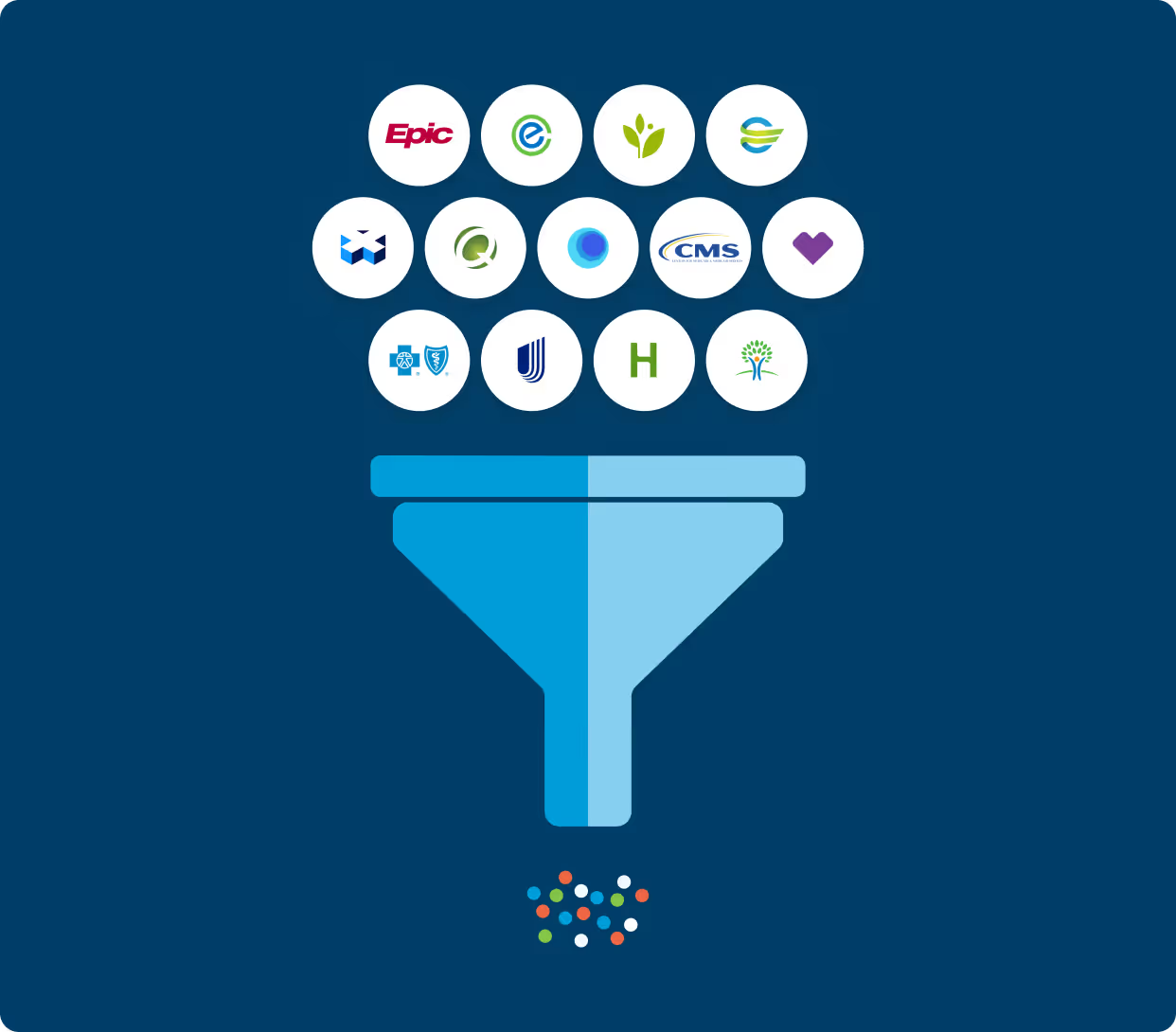
Unify Data
Unify clinical, claims, and operational data into a single source for population health analytics.
- Bring data together in one place: Aggregate clinical, claims, and third-party data into a single, unified platform that eliminates silos and manual reconciliation.
- Create a complete patient view: Achieve a 360° patient view with an Enterprise Master Patient Index (EMPI) that links patient records across systems into a single, longitudinal profile.
- Align provider attribution: Optimize attribution using flexible methods, including provider rosters, payer data, and custom assignment tailored to your ACO’s structure.
Classify Data
Turn raw data into meaningful insight by organizing it into clinically and operationally relevant categories.
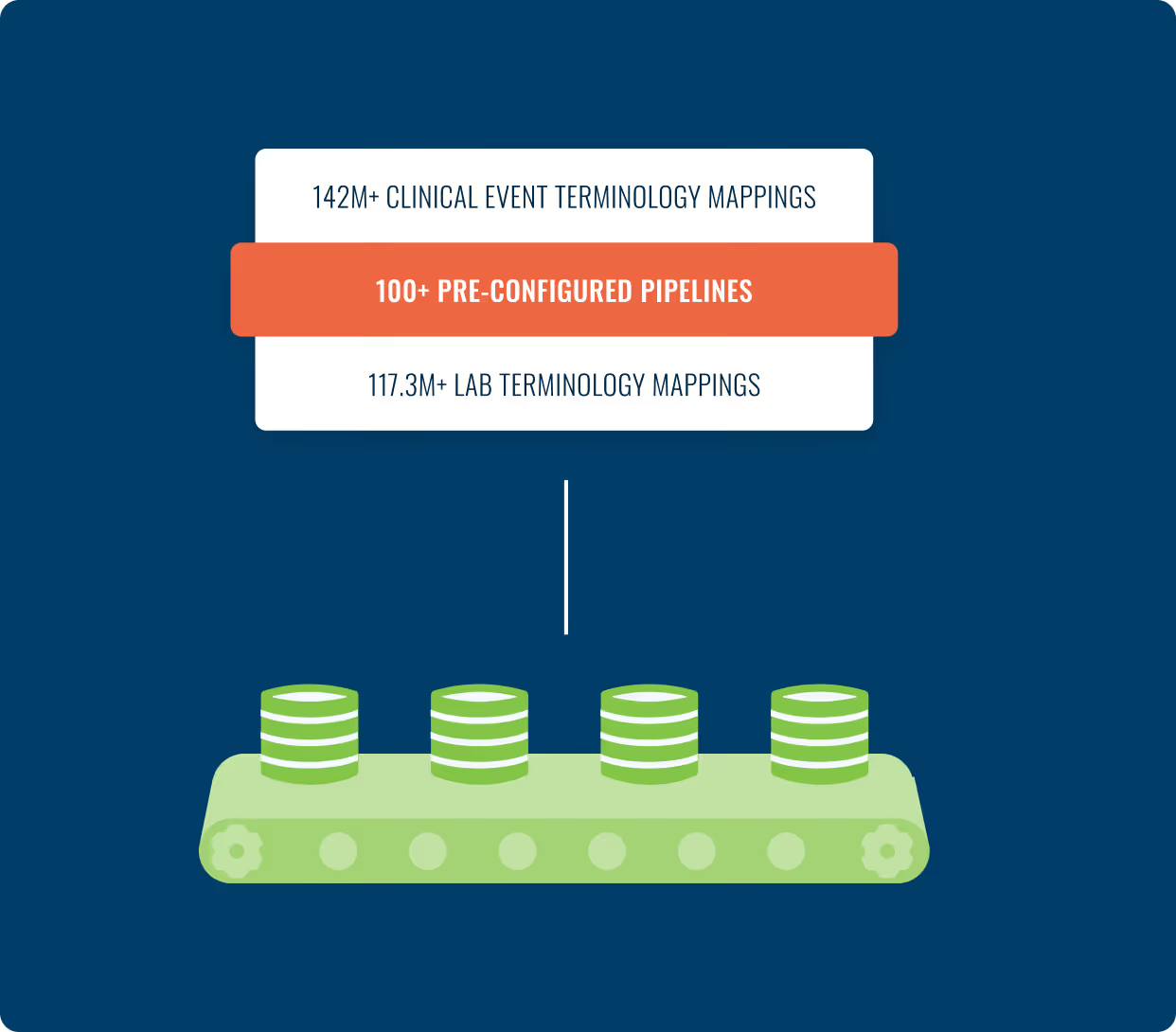
Koan Health utilizes the Johns Hopkins ACG System with our proprietary grouper engine to classify patient data for population health management.
- Identify high-risk patients earlier: Detect elevated risk based on clinical patterns and utilization history.
- Understand disease burden and complexity: Classify conditions with greater precision to support cohort analysis and care management strategies.
- Incorporate social risk factors: Account for social determinants of health (SDoH) that impact outcomes and care planning.
- Prioritize action with risk scoring: Generate actionable risk scores to guide interventions, resource allocation, and care coordination.
Validate Data
Ensure your data is accurate, complete, and ready for analytics, reporting, and value-based care performance.
Koan Health combines automated validation checks with expert human review to ensure the data powering your analytics and reporting is reliable to guide your decisions.
- Automated data validation checks: Every file is systematically reviewed for accuracy, completeness, and formatting to identify inconsistencies early.
- Expert team verification: Healthcare data specialists verify processing accuracy and confirm quality standards are achieved.
- Client review and sign-off: Validate results against your ACO’s book of business and reporting expectations before go-live.
What You Can Do with
Unified Data
Unified Data
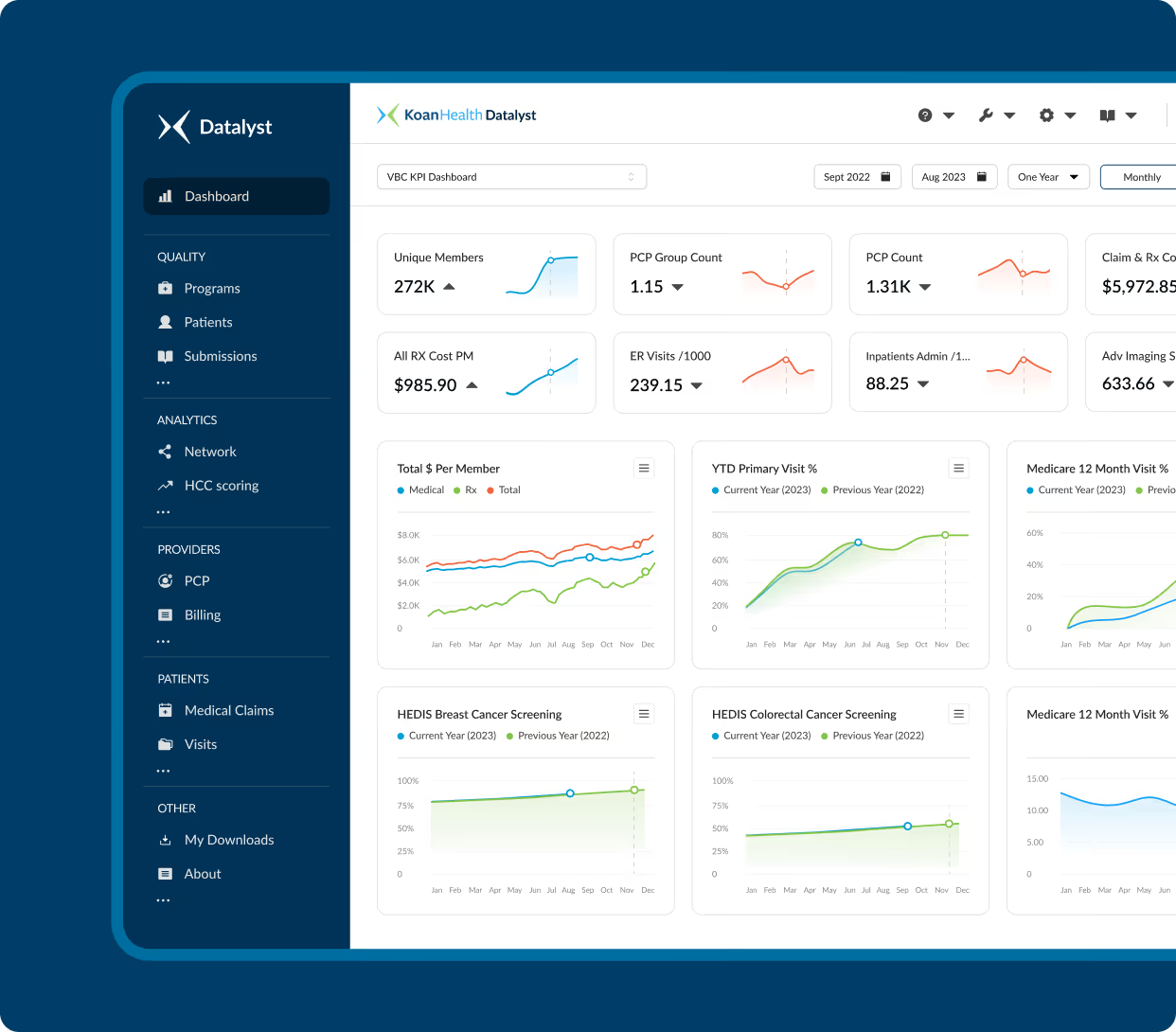
This is where data aggregation translates into measurable performance improvement. Once your data is complete and reliable, your organization can:
Power accurate population health analytics across cost, quality, and utilization

Improve quality measure tracking and gap closure
.svg)
Enable more precise risk stratification and cohort analysis
.svg)
Identify cost drivers and utilization trends
.svg)
Support confident reporting across CMS and commercial payers

Why Koan Health Is Different
Most data aggregation solutions stop at integration—moving data without ensuring it’s usable, aligned, or reliable. Koan Health takes a different approach.
Koan Health unifies, classifies, and validates healthcare data within a single platform to create a complete foundation for analytics, reporting and value-based care performance.
- Integrated directly with analytics, quality, and financial performance tools
- Built for value-based care, not a general data warehouse solution
- Designed to deliver insight—not just move data
- Maintains HITRUST r2 certification, demonstrating rigorous cybersecurity and data protection standards.
There are no mysterious black boxes with Koan Health, so we know exactly how each metric is calculated. Koan Health quickly responds to questions and requests for custom reports.Renee Broadbent, Chief Information OfficerSoNE HEALTH
Frequently Asked Questions For Data Aggregation
What is healthcare data aggregation?
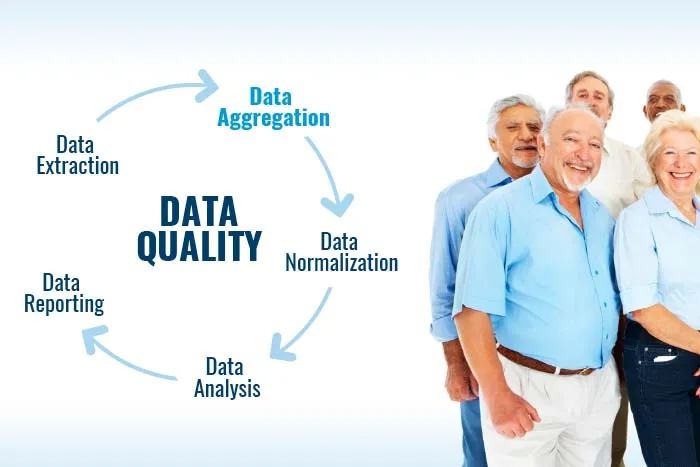
Healthcare data aggregation is the process of combining clinical, claims, operational, and social data from multiple systems into a single, unified dataset. For ACOs, this creates a complete view of patient populations—enabling accurate analytics, performance tracking, and more informed decision-making across value-based care programs.
Why is data aggregation important for ACOs?
ACOs rely on aggregated data to understand total cost of care, identify care gaps, and manage population risk. Without a unified data foundation, organizations struggle with incomplete insights, delayed reporting, and missed opportunities to improve quality and financial performance.
What are the biggest challenges in healthcare data aggregation?
The biggest challenges include fragmented data across systems, inconsistent data formats, duplicate patient records, and gaps in data quality. These issues often lead to conflicting reports and reduced trust in analytics, making it difficult for organizations to take the necessary actions for performance improvement.
What types of data should be included in healthcare data aggregation?
Comprehensive data aggregation should include clinical EHR data, medical and pharmacy claims, lab results, post-acute care data, and social determinants of health (SDoH). Combining these sources creates a complete, longitudinal view of patient care across settings.
How does Koan Health ensure data accuracy and transparency?
Koan Health combines automated validation, expert review by the data team, and client sign-off to verify data accuracy before reporting. Sourcedata remains fully traceable within the platform, providing transparency and confidence in every reported metric.
.svg)
Build A Stronger Data Foundation
See how Koan Health can help your ACO unify, classify, and validate healthcare data for more accurate analytics, reporting, and value-based care performance.


