

blog Post
Financial Impact Analytics
Financial Impact Analytics for ACOs
Understand what's driving healthcare costs, identify financial risks sooner, and make confident decisions before performance is finalized.



In value-based care, financial performance depends on understanding what drives cost and utilization. Koan Health helps ACOs uncover The Drivers of Performance and act before reconciliation.
What is Financial Impact Analytics?
Financial Impact Analytics helps Accountable Care Organizations (ACOs) understand the factors influencing healthcare costs, utilization, and financial outcomes throughout the performance year.
It brings together claims and clinical data through a unified Population Health Analytics platform to provide a clear view of performance, enabling teams to understand trends, evaluate progress, and make informed decisions.
How Does Financial Impact
Analytics Improve Performance?
Financial Impact Analytics helps ACO leaders proactively manage financial performance throughout the year.

Investigate unexpected spending
Pinpoint spikes in utilization and uncover what’s driving increased costs.
.svg)
Monitor performance year-round
Monitor monthly cost, utilization, and financial trends to stay on pace for shared savings.
.svg)
Pinpoint provider variation
Spot providers that are driving higher costs to initiate targeted engagement and improvement.
.svg)
Detect unusual billing patterns
Surface unusual claims activity that may indicate fraud, waste, or inappropriate utilization.

Track shared savings progress
Monitor your financial trajectory and adjust strategies before year-end.
Financial Impact
Analytics Capabilities
Move beyond high-level trends to uncover the root causes of cost, utilization, and financial performance.
Precision HCC Scoring
& Risk Projections
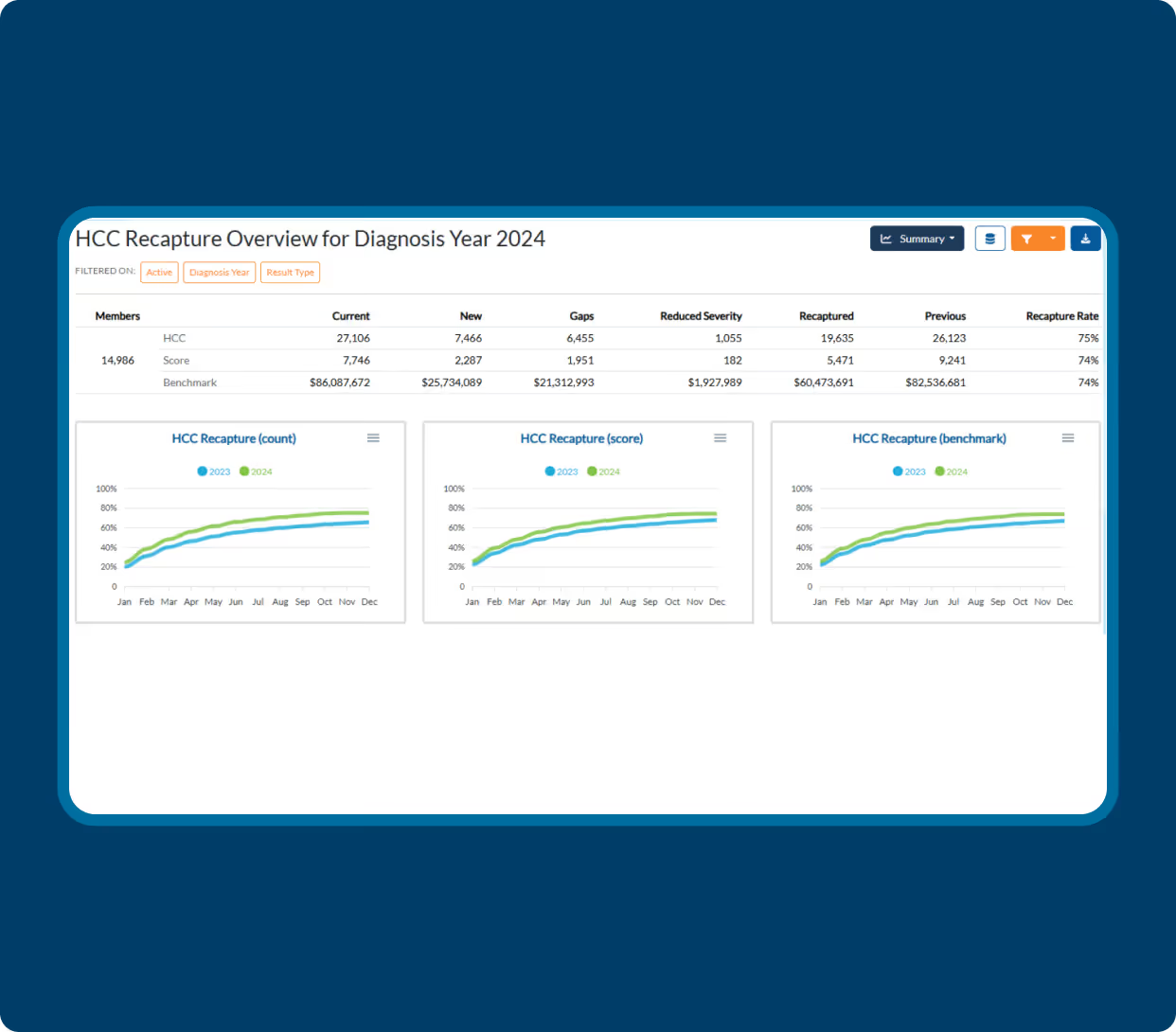
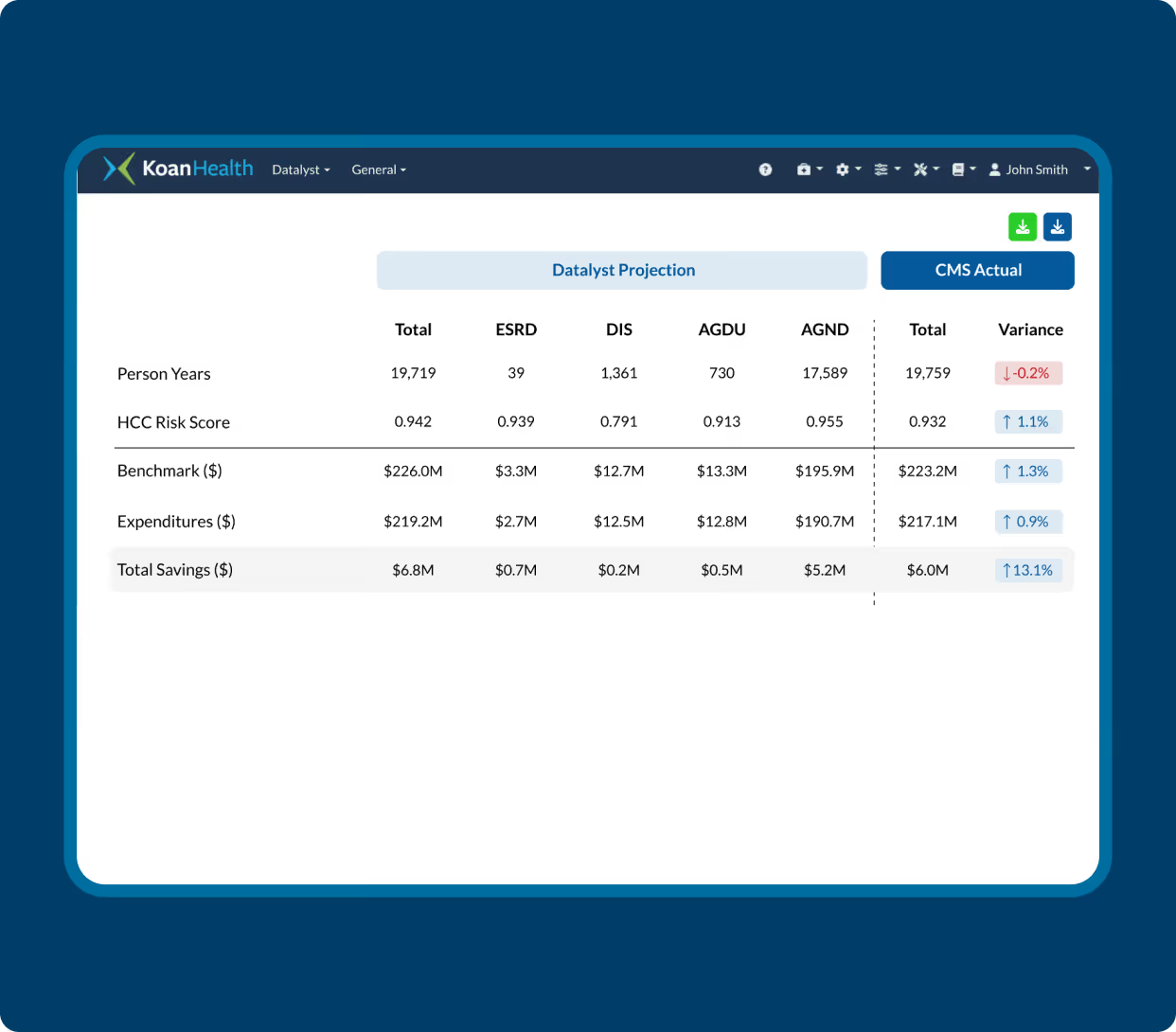
Inaccurate risk adjustment can understate population risk and reduce shared savings potential. Financial Impact Analytics aligns patients to the appropriate CMS eligibility model, so Risk Adjustment Factor (RAF) scores, benchmarks, and projections reflect true population risk.
- Accurate Risk Adjustment: Align patients to the correct CMS eligibility model (e.g., ESRD, Disabled, Aged Non-Dual, Aged Dual) to improve RAF accuracy and reflect true population risk.
- Granular Population Visibility: Drill down from enterprise to provider to patient level to pinpoint the drivers of cost, risk, and financial performance.
- Scenario-Based Performance Modeling: Model future performance using historical results and current HCC data to project outcomes and evaluate potential impact.
- Actionable Risk and Performance Insights: Prioritize high-impact patients and providers for earlier intervention and network optimization.
MSSP Financial
Projections & Forecasting
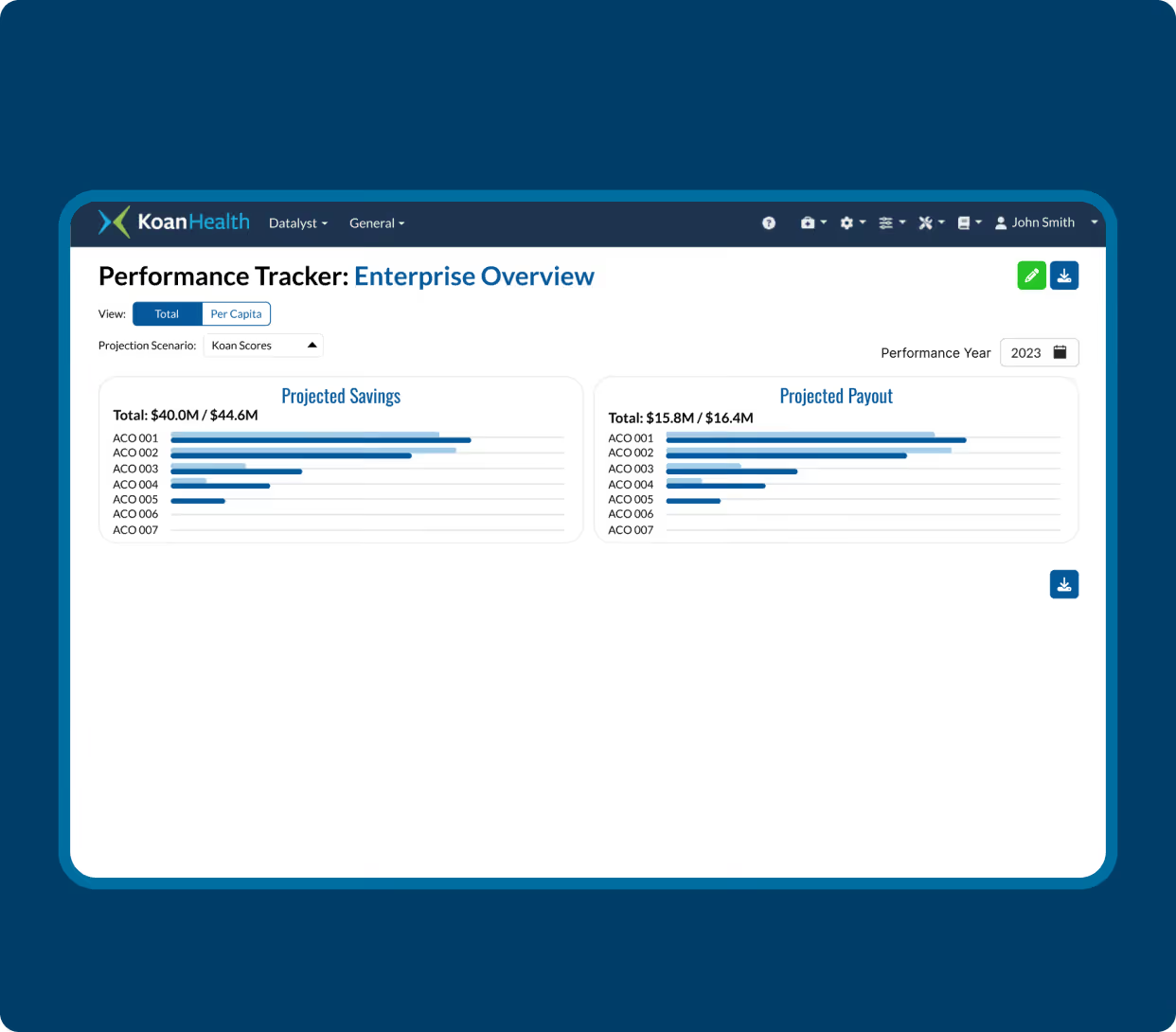
Most ACOs lack visibility into their performance until after CMS reconciliation, by which point it’s too late to act. Financial Impact Analytics combines quarterly claims updates and monthly HCC adjustments to help teams evaluate financial performance, forecast shared savings, and determine where corrective action may be needed.
- Proactive Financial Visibility: Identify performance trends early so you can take timely action and improve financial outcomes.
- Ongoing Performance Monitoring: Review quarterly claims updates to monitor progress and adjust target initiatives throughout the year.
- Targeted Intervention Planning: Prioritize high-cost patients and providers to manage cost outliers
- Shared Savings & Transparency: Evaluate projected shared savings and performance payouts to support provider engagement.
Performance Insights & Root Cause Analysis
Drill beneath summary trends to uncover the operational and financial drivers behind performance variation. From enterprise-level dashboards to patient-level source data, Financial Impact Analytics helps teams answer not just what changed, but why.
- Multi-Level Performance Visibility: Track performance across ACO, group, practice, provider, and patient levels to identify variation, financial risk, and improvement opportunities.
- Measure Intervention Impact Over Time: Evaluate intervention effectiveness and monitor progress throughout the performance year.
- Flexible Claims, Visit, and Service Line Analysis: Analyze trends by claims, DRGs, visits, and service lines to understand the specific drivers behind cost and utilization changes.
- Row-Level Drilldown to Source Data: Analyze from summary trends to the underlying claims or visits with pre-applied filters, helping teams validate findings and answer questions faster.
Why ACOs Choose Koan Health?
Purpose-built for value-based care, Koan Health helps ACOs achieve their business goals by understanding financial performance, forecasting shared savings, and improving patient outcomes.
Deep Drilldown into Cost and Utilization Drivers
Drill from high-level trends into service lines and source claims to pinpoint the drivers of cost and utilization.
.svg)
Precision Risk Modeling & Financial Forecasting
Combine precision risk modeling with ongoing claims updates to generate more accurate forecasts and support earlier intervention.

Visibility into Projected Savings for MSSP
Monitor projected shared savings throughout the performance year to make informed financial decisions before reconciliation.
.svg)
Proven Financial Impact
Supporting clients that have achieved over $800M in Medicare Shared Savings, backed by a world-class Net Promoter Score of 85.

Every day we use Koan Health’s population health platform to track our patients' care journeys and proactively flag suspect charges that deserve closer review across providers and organizations.Todd Searls, Executive DirectorIRCCO

Financial Impact Analytics Frequently Aseked Questions
What is Financial Impact Analytics in an ACO?
Financial Impact Analytics helps ACOs understand the financial drivers of cost, utilization, and performance throughout the performance year, enabling them to improve shared savings outcomes.
How often should ACOs review financial performance?
Leading ACOs review financial performance monthly using regular claims updates and ongoing risk adjustment to identify trends early and make timely adjustments.
How do ACOs track total cost of care?
ACOs track the total cost of care by combining claims and clinical data to analyze spending across care settings, identify utilization patterns, and understand the drivers of costs.
Why is financial performance visibility important?
Timely financial visibility helps ACOs identify emerging trends, address cost drivers earlier, and improve shared savings performance.
How does risk adjustment impact financial performance?
Accurate risk adjustment ensures patient complexity is reflected in RAF scores, which directly impacts benchmarks, financial projections, and shared savings outcomes.
How does Koan Health improve financial performance visibility?
Koan Health combines claims and clinical data into a unified view, helping ACOs uncover financial drivers, forecast shared savings, and make more informed decisions throughout the performance year.
.svg)
Understand Your Financial Performance—Clearly
Discover how Koan Health helps ACOs forecast shared savings, investigate performance variation, and improve financial outcomes.


