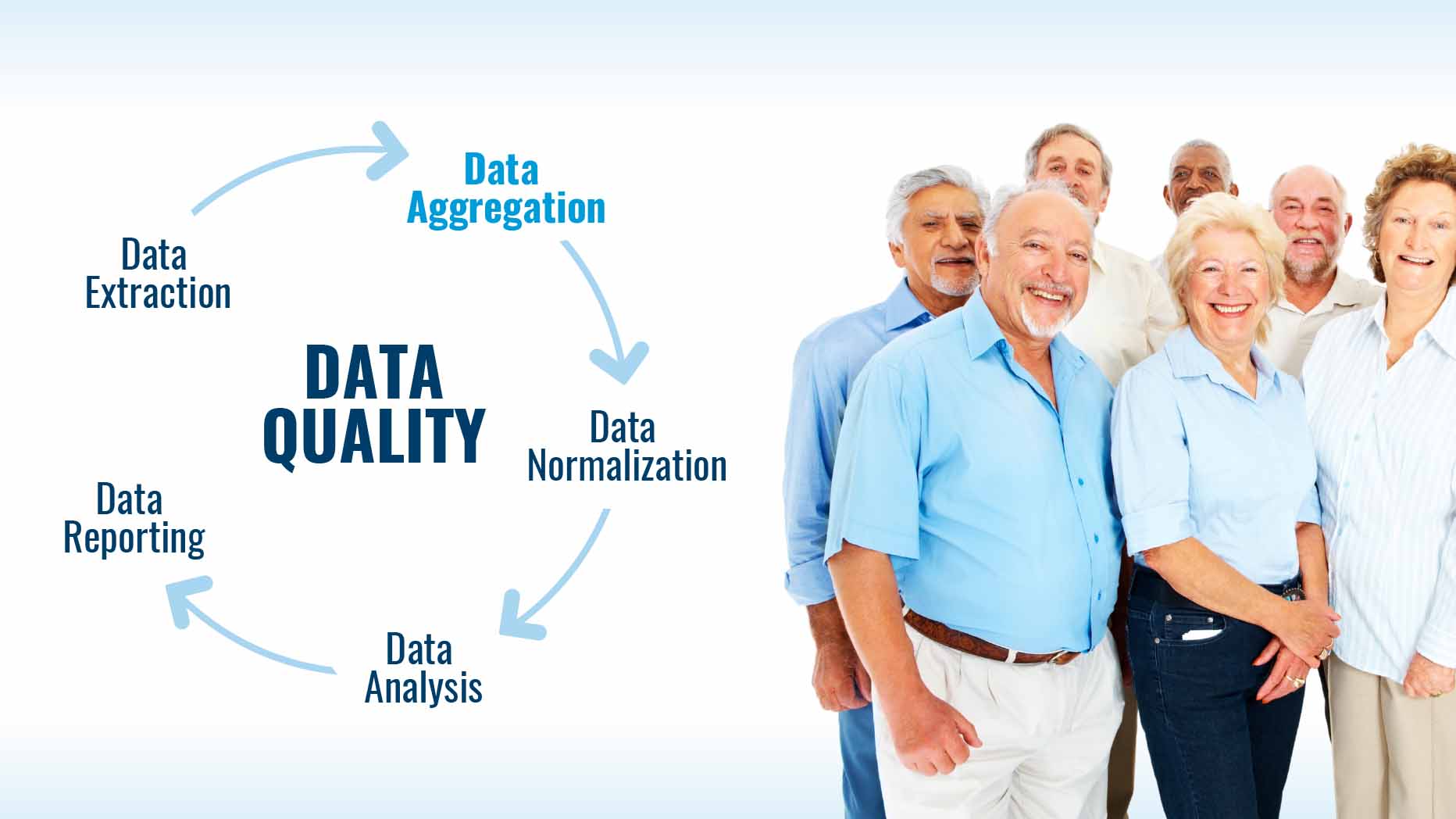


Accountable Care Organizations (ACOs) can’t reliably lower the total cost of care without a complete, trusted, and unified data foundation. Aggregated healthcare data, integrating clinical, claims, pharmacy, post-acute, operational, and social data, creates a true “single source of truth.” This enables ACOs to reduce care variation, enhance forecasting and resource allocation, strengthen predictive analytics, and deliver better outcomes in value-based care programs.
Why Healthcare Data Aggregation Matters for ACOs
Healthcare organizations are under pressure to lower the total cost of care while improving quality. U.S. national health expenditures rose 7.5 % to nearly $4.9 trillion — outpacing economic growth — illustrating the mounting cost pressures that value-based care and data aggregation seek to address.
But you can’t redesign care pathways, reduce variation, close gaps, or deploy targeted interventions without seeing the full picture of patient needs and performance across your network.
Yet many organizations still face:
- Fragmented electronic health records (EHRs) and claims systems
- Lack of integration across post-acute, pharmacy, behavioral health, and social services
- Manual, error-prone reporting
- Inconsistent data definitions and quality across sites
In this environment, interventions are slow, incomplete, or based on inaccurate insights.
Trusted, accurate aggregated data changes that.
It creates a reliable data-driven foundation that allows ACOs to analyze spend, pinpoint cost drivers, and deploy interventions systemwide with confidence.
What Trusted, Aggregated Data Actually Means
Healthcare data aggregation is the process of integrating clinical, claims, pharmacy, lab, social, financial, and operational data into a single, standardized source of truth that is trusted across all organizational stakeholders.
Many healthcare systems believe they have aggregated data. In reality, most have only collected data—siloed information pulled from multiple sources without true harmonization.
Collected Data vs. Aggregated Data: Key Differences
Collected Data:
- Multiple disconnected sources
- Inconsistent definitions and formats
- Duplicate patient records
- Limited cross-system visibility
True Aggregated Data:
- Unified patient data across all systems
- Standardized terminology and metrics
- Single source of truth
- Real-time or near-real-time updates
True healthcare data aggregation requires:
- Integrating clinical, claims, pharmacy, lab, social, and operational data
- Normalizing and mapping disparate EHR data into standard formats
- Deduplicating patient records and reconciling identifiers
- Aligning definitions (e.g., readmission, high-cost episode)
- Creating a single source of truth trusted across clinical, financial, and operational teams
When your data analytics is missing pieces, insights are flawed—and leaders hesitate to act.
How Trusted Aggregated Data Drives Cost Savings
1. Eliminates Hidden Waste and Variations in Patient Care
Multiple analyses estimate that roughly **one-quarter of U.S. healthcare spending — about $760 billion–$935 billion annually — may be attributable to waste, including inefficiencies, low-value care, administrative complexity, and care coordination failures.
A significant portion of healthcare waste is invisible without a unified dataset. With fully aggregated and accurate patient data, ACOs can finally compare performance across sites, healthcare providers, and service lines.
Unified data exposes:
- Unnecessary imaging, tests, or procedures
- Variation in length of stay
- High-cost providers with similar patient acuity
- Inefficient order sets, supply usage, or workflows
- Medication adherence gaps
- Predictable patterns of avoidable ED visits
Use case:
One ACO identified a subset of primary care providers who ordered imaging 3 times more often than peers, with no difference in outcomes. Standardization saved millions without affecting quality.
Aggregated healthcare data is the only systematic way to find and eliminate clinical waste at scale.
2. Enables Precision Resource Allocation Across the Patient Care Continuum
Total U.S. health care spending reached **$4.9 trillion in 2023 — about 17.6 % of GDP — and is continuing to grow, underscoring why reducing inefficiencies and workforce misalignment is so critical for cost containment.
Without complete healthcare data integration, resource planning becomes guesswork. Labor represents the highest cost in healthcare, making accurate forecasting essential for immediate savings.
Aggregated data enables:
- Accurate forecasting of patient volumes and care needs
- Optimized staffing models based on actual demand patterns for patient care
- Right-sizing care management resources for high-risk populations
- Matching high-risk patients with the right intervention levels
- Predicting seasonal surges or disease trends
- Identifying underutilized or overburdened resources
Use case:
A healthcare system used aggregated EHR + claims + scheduling data to identify care gaps for high-risk patients. By pinpointing patients for care management interventions, they closed critical care gaps – improving patient outcomes and quality measures.
Unmanaged high-risk patients are heavy users of healthcare services, and they account for the highest cost in healthcare. Precision care management through data aggregation enables accurate forecasting that yields savings
3. Strengthens Predictive and Preventive Care
Predictive analytics are only as good as the underlying data. Siloed or incomplete datasets produce unstable predictions and unreliable risk scores that healthcare organizations can’t trust for clinical decisions.
When data is aggregated and trusted, models can reliably predict:
- Rising-risk identification before acute events occur
- Avoidable hospital readmissions within 30, 60, or 90 days
- Likelihood of emergency department utilization
- Disease progression for chronic conditions to inform care coordination interventions
- Targeted care management interventions for improved patient health
- Social determinants of health impacting cost and outcomes. Advanced social determinants-informed models can strengthen associations between healthcare utilization and outcomes, improving predictive accuracy beyond traditional clinical and claims inputs.
This empowers ACOs to intervene early before conditions escalate into avoidable inpatient events.
Use case:
An ACO integrated clinical + claims + SDOH data to identify patients at risk of CKD progression. Early intervention reduced progression to ESRD by 16%, lowering dialysis-related spend.
Preventing even one inpatient stay or disease escalation event can save thousands.
4. Improves Performance in Value-Based Care
Success in MSSP and other value-based payment models depends on accurate, comprehensive, and timely data.
Value-based care analytics require clarity around:
- Total cost of care across all settings
- Episode-level cost analysis and benchmarking
- Attribution accuracy for patient populations
- Quality outcomes and care gap identification
- Performance-based incentive calculations
- Risk adjustment accuracy for fair comparisons
None of these measurements are possible with partial, inconsistent, or fragmented healthcare data.
Examples of savings driven by trusted data aggregation:
- Identifying high-cost episodes and redesigning evidence-based care pathways
- Targeting providers needing documentation or coding improvement
- Streamlining transitions of care across skilled nursing facilities, home health, and specialists
- Reducing network leakage through complete visibility into referral patterns
ACOs with strong and trusted data aggregation foundations consistently outperform peers in Medicare Shared Savings Program (MSSP) performance and achieve higher shared savings distributions.
Why Trust in Data Aggregation is Essential
Even with data aggregation technology, cost savings stall when ACO leaders question the accuracy and don’t trust the insights.
Common Trust Blockers in Healthcare Data:
- Different providers using different clinical definitions
- Data that conflicts between systems (EHR vs. claims)
- Missing or inconsistent integration of clinical and financial data
- Analytics dashboards that produce contradictory results
- Manual data manipulation that introduces errors and delays
When Organizations Invest in Data Governance and Quality:
- Higher clinician engagement with analytics and insights
- Faster decision cycles for cost-saving initiatives
- Quicker adoption of evidence-based care pathways
- Better performance in value-based care programs
- Increased shared savings and improved margins
Trusted healthcare data accelerates action by giving leaders confidence to make strategic decisions.
What Technologies Enable True Healthcare Data Aggregation?
Achieving true data aggregation requires more than simply collecting information from multiple sources. ACOs need specialized population health analytics platforms that can integrate, normalize, standardize, and validate healthcare data while maintaining complete transparency and accuracy.
Essential Technology Components for Data Aggregation:
Enterprise Master Patient Index (EMPI)
Links and merges patient records across disparate systems to create a unified, 360-degree patient view and eliminate duplicate records.
Multi-Source Data Integration
Supports integration from clinical, claims, lab, pharmacy, and social determinants of health sources in both standard and non-standard formats.
Data Normalization and Standardization Engine
Maps disparate EHR data into standard formats, deduplicates records, and aligns definitions to create consistent, comparable data.
Advanced Risk Stratification and Grouping
Incorporates nationally recognized classification systems like Johns Hopkins ACG® software to provide risk scores, disease classification, and social needs markers.
Multi-Level Data Validation Process
Ensures data accuracy through automated checks, comparison against book of business reports, and client sign-off procedures.
Complete Data Transparency and Traceability
Preserves all original source data so users can verify any calculation, metric, or trend at any time—building confidence and enabling rapid troubleshooting.
Flexible Reporting and Analytics
Aggregates reports across multiple levels—by medical group, region, provider, or member cohort—with customizable dashboards for each stakeholder.
NCQA Certification and Compliance
Maintains HEDIS® and Data Aggregator Validation (DAV) certification to ensure quality reporting aligns with current specifications for payer submissions.
What to Look for in a Population Health Analytics Platform:
When evaluating technology solutions, ACO leaders should prioritize:
- Proven data accuracy: Look for platforms with rigorous validation processes and transparent data lineage
- Rapid implementation: Solutions should onboard new ACO programs within weeks, not months
- Comprehensive data source support: The platform should integrate clinical, claims, pharmacy, lab, social, and operational data seamlessly
- Dedicated support: Expert account executives and value-based care consultants who proactively identify opportunities
- Flexible customization: Ability to create custom reports and dashboards tailored to your specific needs
- Quality measure expertise: NCQA certification and built-in quality measure tracking for all major payer programs
Advanced population health analytics platforms combine these technology components with expert support to help ACOs not just aggregate data, but transform it into actionable insights that drive measurable improvements in cost, quality, and patient health.
Benefits of Sustained Data Aggregation
Since 2012 MSSP ACOs have generated ~$35B in gross and $13.6B in net savings. (Accountable for Health, 2025). Beyond immediate cost savings and quality improvements, sustained data aggregation creates lasting competitive advantages that transform how ACOs deliver care.
1. Consistent Financial Performance
Maximized Shared Savings Year Over Year
As of January 1, 2024, the Medicare Shared Savings Program included 480 ACOs serving approximately 10.8 million beneficiaries, reflecting steady growth in participation and opportunities for expanded cost-quality improvements with sustained data aggregation.
Reliable data helps ACOs systematically identify opportunities, achieving increasingly higher shared savings distributions. Leading organizations have generated hundreds of millions in Medicare shared savings through maintained data accuracy.
Improved Payer Negotiations
Comprehensive, validated data enables ACOs to confidently negotiate contracts, challenge incorrect calculations, and recover disputed revenue.
Network Growth and Provider Retention
Robust analytics platforms attract high-performing providers and retain network members by demonstrating clear success pathways and actionable insights.
2. Cultural Transformation
Enhanced Clinician Engagement
Trusted data transforms providers into active quality improvement participants who use insights to improve practice patterns and close care gaps.
Faster Innovation and Adaptation
Mature data capabilities enable rapid testing of new care models and scaling of successful interventions—creating strategic agility.
Empowered Care Teams
Complete patient views and predictive insights allow proactive intervention, improving job satisfaction and patient experience.
3. Superior Patient Outcomes
Proactive Disease Management
Longitudinal data reveals disease progression patterns years in advance, enabling early interventions that prevent costly complications.
Reduced Health Disparities
Social determinants data helps ACOs identify care gaps across population segments and develop targeted interventions for underserved communities.
Improved Care Coordination
Visibility across the entire care continuum enables seamless transitions, reduces duplicative care, and ensures appropriate care delivery.
4. Competitive Advantage
Readiness for New Payment Models
Mature data aggregation enables quick adaptation to alternative payment models and rapid financial impact analysis.
Enhanced Risk Management
Comprehensive historical data supports sophisticated actuarial analysis and informed decisions about risk-sharing arrangements.
Strategic Planning
Aggregated data identifies service line opportunities, market dynamics, partnership potential, and network expansion strategies.
Building a Learning Health System
Organizations with sustained data aggregation become learning health systems that continuously improve care delivery through rapid-cycle improvement initiatives, real-world evidence generation, and sustainable value creation for all stakeholders.
The investment in data aggregation technology, governance, and expertise compounds over years, creating capabilities that position ACOs for long-term leadership in value-based care.
Key Takeaways for ACO Leaders
For ACOs striving to reduce total cost of care, aggregated healthcare data isn’t just a technical requirement; it’s a strategic advantage. When the full picture of patient needs, care patterns, and cost drivers becomes visible, organizations can take swift, confident action that improves outcomes and reduces unnecessary spend.
1. Healthcare data aggregation is a strategic cost-saving asset, not just a technical project.
Without a complete, unified view, ACOs cannot effectively control total cost of care or compete in value-based payment models.
2. Clinical waste and variation only become visible when data is accurate and connected.
Healthcare spending that represents waste cannot be systematically eliminated without comprehensive data integration. Precision resource allocation through data aggregation yields immediate, measurable cost savings.
3. Predictive care and early intervention only work with complete, clean data foundations.
Unreliable data produces unreliable predictions that clinicians will not trust or act upon.
4. Value-based care performance depends on trust—leaders must believe the data is correct to take action.
Data governance and quality assurance are essential investments that accelerate adoption and results.
5. The ROI is immediate and measurable across operations, care delivery, and financial performance.
Organizations see returns within months through resource optimization, reduced variation, and better performance in value-based contracts.
Proven Solutions for Data Aggregation
Leading ACOs recognize that achieving true data aggregation requires specialized technology, deep healthcare expertise, and unwavering commitment to accuracy and transparency.
Koan Health's population health analytics platform, Datalyst™, is purpose-built for ACOs and Clinically Integrated Networks managing risk-based populations. With over 30 years of healthcare analytics expertise, Koan Health has helped clients generate over $800 million in Medicare shared savings through accurate, transparent, and actionable data insights.
What sets Datalyst apart:
- NCQA Data Aggregator Validation (DAV) Certification: The highest level of NCQA certification, demonstrating commitment to delivering high-value clinical data that health plans and providers can trust
- Complete data transparency: Preserve all source data so you can verify any calculation or metric at any time
- Rapid implementation: Onboard new ACO programs within weeks, not months
- Expert guidance: Dedicated account executives and value-based care consultants who proactively identify opportunities and guide your team to success
- Proven results: Net Promoter Score of 85 reflecting exceptional client satisfaction and outcomes
Ready to build a trusted data foundation that drives measurable results? Contact Koan Health to discover how leading ACOs are achieving sustainable cost savings and superior performance in value-based care programs.
.svg)